


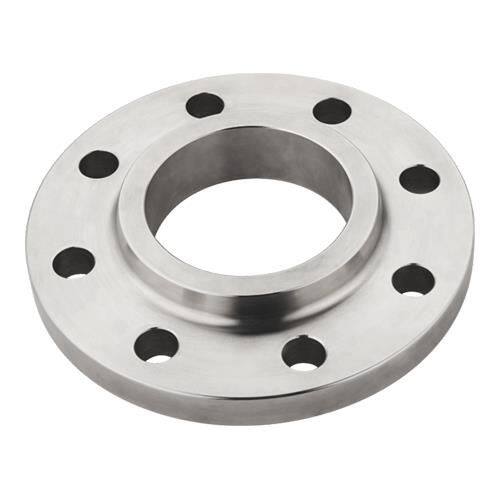


Precautions for using 304 stainless steel flanges:
1. In order to prevent the corrosion between the eyes due to the heating of the flange cover, the welding current should not be too large, about 20% less than that of carbon steel electrode, the arc should not be too long, the interlayer cooling is fast, and the narrow welding bead is better.
2. The electrode should be kept dry when in use. The calcium-titanium type should be dried at 150℃ for 1 hour, and the low-a hydrogen type should be dried at 200-250℃ for 1 hour (do not repeat the drying, otherwise the coating will easily crack and peel) to prevent The electrode coating sticks to oil and other dirt, so as not to increase the carbon content of the weld and affect the quality of the weldment.
3. When 304 stainless steel flange pipe fittings are welded, carbides are precipitated after repeated heating, which reduces corrosion resistance and mechanical properties.
4. Chromium 304 stainless steel flange pipe fittings have larger hardenability American standard flanges after welding, which is easy to crack. If the same type of chromium stainless steel electrode (G202, G207) is used for welding, preheating above 300℃ and slow cooling treatment at about 700℃ after welding must be carried out. If the weldment cannot be subjected to post-weld heat treatment, stainless steel flange pipe welding rods (A107, A207) should be used.
5. For 304 stainless steel flanges, appropriate amount of stability elements Ti, Nb, Mo, etc. are added to improve corrosion resistance and weldability. The weldability is better than that of chromium 304 stainless steel flanges. When using the same type of chromium stainless steel flange electrode (G302, G307), it should be preheated above 200℃ and tempered at about 800℃ after welding. If the weldment cannot be heat treated, stainless steel flange pipe welding rods (A107, A207) should be used.
6. 304 Stainless steel flange pipe fittings and butt welding flange electrodes have good corrosion resistance and oxidation resistance, and are widely used in chemical, fertilizer, petroleum, and medical machinery manufacturing.


304 stainless steel
To improve the corrosion resistance and decoration of large 304 stainless steel flanges, it is necessary to polish the surface of 304 stainless steel. Currently, manual, mechanical, chemical, and electrochemical polishing are used. The existing 304 stainless steel electropolishing fluids contain phosphoric acid and chromic anhydride, resulting in the discharge of a significant amount of chromium (VI) and phosphate in the wastewater during the polishing and cleaning process, causing environmental pollution. After testing, the following formula and process conditions are recommended:
| 1 | 2 | 3 | |
| H3PO4 (%) | 40-50 | 20-30 | |
| H2SO4 (%) | 15-20 | 20-30 | |
| HNO3 (%) | 10-15 | ||
| Perchloric acid (%) | 8-10 | ||
| Glacial acetic acid (%) | remaining | ||
| H2O | remaining | ||
| Additives | Appropriate amount of dextrin, appropriate amount of glycerin A additives, a small amount of | ||
| t (℃) | 60-70 | 65-70 | Normal temperature |
| Da (A/dm²) | 20-30 | 15-30 | 10-30 |
| T (min) | 3-5 | 3-5 | 3-8 |

The chemical polishing of large 304 stainless steel flange is that the flange surface is bright and smooth through regular dissolution. During the chemical polishing process, the passive oxide film and the oxide film are continuously formed on the surface of the steel large-scale 304 stainless steel flange, and the former is stronger than the latter. Due to the microscopic inconsistency of the surface of the large 304 stainless steel flange, the surface microscopic convex parts are preferentially dissolved, and the dissolution rate is greater than the dissolution rate of the concave parts; and the dissolution of the film and the formation of the film always proceed at the same time, but the rate is different. The surface roughness of the steel large 304 stainless steel flange can be leveled to obtain a smooth and bright surface. Polishing can fill surface pores, scratches and other surface defects, thereby improving fatigue resistance and corrosion resistance.

Electrochemical polishing is also called electrolytic polishing. Electrolytic polishing uses the large 304 stainless steel flange to be polished as the anode and the insoluble metal as the cathode. The two poles are immersed in the electrolytic cell at the same time. Direct current is applied to produce selective anode dissolution, thereby increasing the surface brightness of the large 304 stainless steel flange. , To achieve a mirror effect. Environment-friendly electro-polishing liquid formulations 1 and 2 do not use chromic anhydride and use less phosphoric acid. This formulation reduces pollution emissions. The formula does not use phosphoric acid and chromic anhydride at all, which solves the environmental problem of wastewater discharge. It is a new type of pollution-free and environmentally friendly electrochemical polishing agent. Its process flow is basically the same as the original process conditions, and the polishing effect is also Basically the same, to ensure the polishing quality. In the production process, 304 stainless steel is prone to some black oxide scale or microscopic inequality, which affects its use value. Only its reprocessing such as mechanical polishing, chemical polishing and electrochemical polishing can improve its own value, so the following process may be recommended to obtain better results.


