

What specific effects will the incorrect stainless steel flange gasket selection have on the sealing performance of the system?
The main function of stainless steel flange gaskets is to provide sealing to ensure that the fluid or gas at the flange connection does not leak. Selecting an inappropriate gasket will directly affect the sealing performance of the system, and the specific effects are as follows
- Reasons for reduced sealing performance: The error in selecting flange gaskets is usually due to the inconsistency between its material, thickness, hardness or surface roughness and the actual use environment. In addition, there are some factors that affect the sealing effect. For example, if the gasket is too hard, it may not achieve the ideal sealing effect at the connection part, and if the gasket is too soft, it may be compressed too thin, resulting in unsuccessful sealing.
- Consequences of seal failure: Seal failure usually leads to gas or liquid leakage, which causes fluctuations in system pressure, which may affect the overall operating efficiency. Once a leak occurs, it will cause great harm to the entire equipment and even make the equipment unable to work properly. In certain occasions, the failure of the seal may lead to major safety hazards such as fire and explosion. For example, in the petrochemical industry, due to the pipeline connection, a large amount of flammable and explosive media will enter the device. Leakage may cause a series of problems such as production interruption, rising maintenance costs and environmental pollution.
- Impact of mismatch between 304 Stainless Steel Flanges gasket material and design: If a material that is not suitable for high temperature or corrosive environment is selected, the gasket may degrade rapidly or fail completely. Wear of the gasket during long-term operation is one of the main causes of leakage. In addition, various design elements of the gasket (such as its shape and thickness) do not meet the standards of actual application, which may also lead to poor sealing effect.
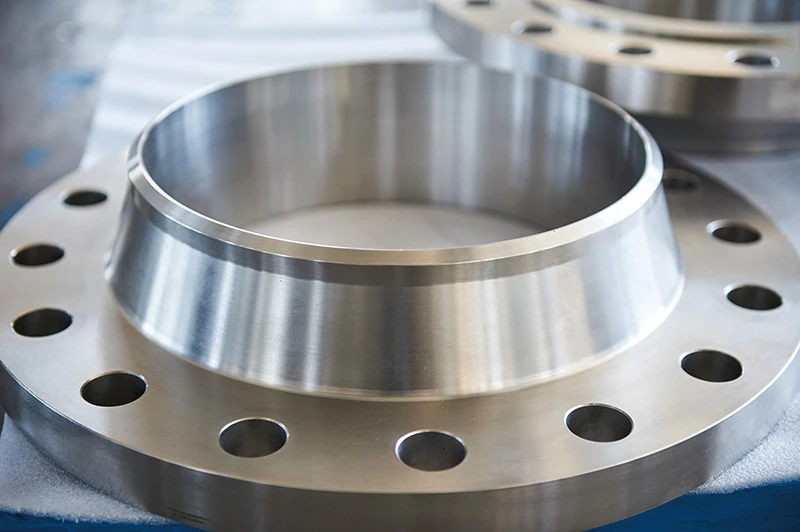
What types of leakage problems may be caused by choosing an inappropriate stainless steel flange gasket?
The wrong choice of stainless steel flange gasket will lead to different types of leakage problems, which are mainly manifested in the following aspects:
Common leakage types:
- Gas leakage: Gas leakage mainly occurs in high-pressure gas pipeline systems. For example, a large amount of natural gas often leaks from natural gas transmission pipelines. Due to the inappropriate hardness and size of the gasket and the insufficient sealing, the gas may leak out through the flange joint.
- Liquid leakage: Liquid leakage is a common phenomenon in liquid transmission pipelines, especially in high temperature and high pressure environments. Due to the presence of a large number of tiny particles and gases in the pipeline, if the sealing gasket is not installed correctly or the sealing performance is poor, bubbles will be generated, causing the liquid in the pipe to leak. An incorrect gasket may not be able to withstand the pressure exerted by the liquid, causing liquid leakage at the joint position
The impact of incorrect selection on the cause of leakage:
- Too large or too small thickness: If the thickness of the 304 Stainless Steel Flanges gasket is too large or too small, this may cause excessive concentration of pressure in the center of the gasket, which may cause uneven contact problems; too thin gaskets are prone to excessive dispersion of stress in local areas, resulting in cracks and even leakage. If the gasket is too thin, it may not provide sufficient sealing effect.
- Inappropriate hardness: If the hardness of the gasket is too high, it may not be able to adapt to the slight unevenness of the flange surface, resulting in poor sealing effect; if the hardness is too low, the gasket may be over-compressed and unable to return to its original state.
- Affecting the effectiveness of leakage control measures: If an inappropriate flange gasket is selected, other leakage control measures (such as sealants or additional gasket layers) may be ineffective. In this way, even if protective measures are taken, leakage may still occur.
What is the impact of improper selection of stainless steel flange gasket materials on the corrosion resistance of the system?
Material selection is crucial to the corrosion resistance of 304 Stainless Steel Flanges gaskets. If unsuitable materials are selected, the system will face a greater risk of corrosion, especially in chemicals or extreme environments:
- The impact of inappropriate materials on corrosion resistance: The corrosion resistance of stainless steel flange gaskets is determined by their material composition. Since stainless steel itself has excellent corrosion resistance, stainless steel flange gaskets are generally made of alloy steel with a high chromium content. If the selected material does not have sufficient corrosion resistance, the gasket may corrode in extreme cases, shortening its service life and even causing leakage.
- Risk of reaction with media: When dealing with certain highly corrosive chemicals (such as acids, alkalis or salt solutions), the selection of inappropriate materials may cause reactions with the media, thereby accelerating the decomposition process of the gasket. These corrosive media include acidic gases such as sulfuric acid and hydrochloric acid and some toxic and harmful liquids. For example, in a strong acid environment, ordinary stainless steel may suffer from pitting, which affects its sealing effect.
- Corrosion and wear problems in long-term use: Gaskets that are exposed to high temperature, high pressure or corrosive media for a long time will gradually corrode or wear if the appropriate materials are not selected, resulting in sealing failure and system failure, increasing maintenance and replacement costs.
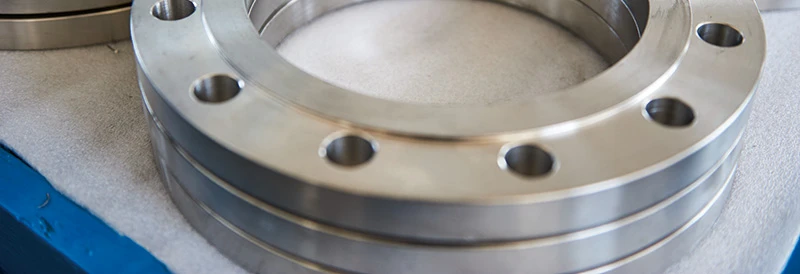
What safety issues will the wrong stainless steel flange gasket cause in high pressure or high temperature environment?
High pressure and high temperature environment have very high requirements for 304 Stainless Steel Flanges gaskets. Wrong selection of gasket material or size will directly threaten the safety of the system:
- Gasket failure in high temperature and high pressure environment: Under high temperature and high pressure, if the stainless steel flange gasket cannot withstand the pressure and temperature of the extreme environment, it may cause the gasket to expand, deform or break, and eventually lead to seal failure.
- Safety hazards caused by seal failure: Due to the failure of the seal, gas or liquid leakage may occur, especially in the chemical or petrochemical fields, which may trigger fire, explosion or other major accidents. Leakage not only harms the equipment and environment, but also threatens the life safety of operators.
- Thermal expansion and stress concentration problems caused by improper material selection: The wrong material may expand or deform under high temperature conditions, which will cause the gasket to be unable to distribute pressure evenly, thus forming a stress concentration area. When the bolt is tightened, a large friction force is generated between the nut and the gasket, causing the nut to move inward and crush the sealing surface. These stress points may cause the gasket to fail prematurely, which will have a serious negative impact on the stability and safety of the flange connection.
What impact will the wrong selection of stainless steel flange gasket size have on the stress and distribution at the flange connection?
The size of the stainless steel flange gasket directly affects the stress distribution and sealing effect at the flange connection:
- The impact of size mismatch on contact pressure distribution: The size of the 304 Stainless Steel Flanges gasket (such as diameter and thickness) should be exactly matched with the size of the flange. For flanges of different structural types, the size of the assembly gap is different. If the gasket is too large or too small, it may cause uneven contact of the sealing surface, which will not generate sufficient sealing pressure, further affecting the sealing effect.
- Stress concentration and possible deformation problems at the flange connection: The error in size may cause uneven stress distribution on the contact surface, resulting in stress concentration. Excessive stress may cause deformation or fracture of the material of the flange connection part, which will have an adverse effect on its sealing effect.
- Uneven sealing and leak formation caused by wrong size: Some areas of the gasket may be over-compressed, while other areas may have gaps, which will lead to uneven sealing and leaks, which will aggravate the leakage problem.
The correct selection of stainless steel flange gaskets is the key to ensure the safe and stable operation of the system. Considering the requirements of different working environments, it is crucial to accurately select the right gasket material, size and design. Avoiding the above mistakes can effectively reduce the risk of leakage, improve the corrosion resistance of the system, and ensure the long-term stability and safety of the flange connection.