



Chuxin Flange Fitting Co., Ltd., formerly known as Yongxing Jinggong Pipe Fitting Factory, founded in 1994, is a non-regional high-tech enterprise specializing in the design, development, production, sales and after-sales of flanges and pipe fittings. Our products sell well nationwide and far to overseas nations and regions.
Our Advantages
Rich Experience
Established in 1994, our company has about 30 years' experience in the design, development, production, sales and after sales service of flanges and pipe fitting.
Advanced Equipment
Our company has processing equipment and advanced testing instruments including hundreds of high-precision CNC lathes and desktop spectrometers, portable spectrometers, universal testing machines, impact testing machines, ultrasonic flaw detectors, metallographic detectors, Rockwell hardness testers, low-temperature cryogenic treatment tanks, etc.
Quality Control
Our products are produced and inspected strictly in accordance with GB, AISI, ASTM, API, JIS, BS so as to control and safeguard the quality of products. We successively obtained ISO9001-2008 quality control system and CE (2014/68/EU) certification and API certification.
High Quality Product
Our company provides flanges made from high-temperature-resistant alloy steel and low-temperature alloy steel, where the high-temperature-resistant materials products can be long-term operated under high temperature above 600°C and under certain stress action, the low-temperature materials products can be used under extreme work conditions below -196°C.

304 Stainless Steel Flanges are some of the most commonly used grades of flange. These are used to connect two or more pipes or other piping components together. The ASTM A182 F304 Pipe Flanges are made up of the 304 austenitic stainless steel which is a chromium nickel alloy. The material is stronger and has some extent of corrosion resistance in general purpose applications.

Stainless Steel 316 Flanges are made up of the 316 austenitic stainless steel. This grade of steel is a chromium nickel molybdenum alloy. Since the addition of the molybdenum content, the fittings made of this material are stronger and corrosion resistant than the 304 stainless steel. There are different ASTM A182 F316 Pipe Flanges made in this grade and are used in applications that require corrosion resistance. The Grade F316 Blind Flanges are used in such applications to seal off pipes.

Stainless Steel Weld Neck Flange
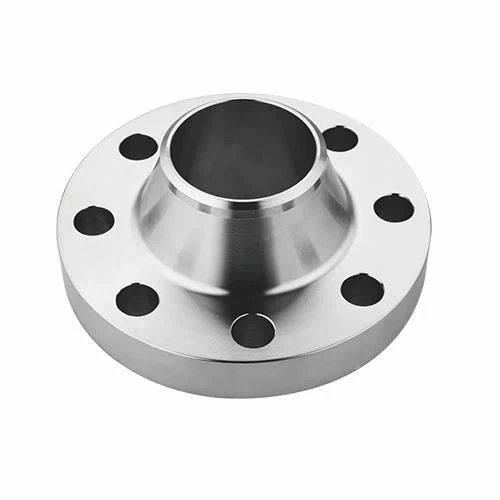
Stainless Steel Weld Neck Flange has a long tapered hub and are often used for high pressure applications. This kind of flange is designed to be butt-welded to pipes and provide a high strength, leak-proof connection. They are commonly used in high-pressure applications, such as oil and gas pipelines, and are preferred where frequent dismantling is not required.

Bs4504 Pn16 Blind plate is a flange cover with no hole in the middle, which is used to seal pipeline plugs. It is also called flange cover and blind flange. There are many types of sealing surface, including flat blind plate, convex surface, concave and convex surface, Tongue and groove surface, ring connection surface. The blind plate/flange cover has the characteristics of safe and convenient operation, low original consumption and high production efficiency.

Alloy Steel 8 Character Blind Plate
Alloy Steel 8 Character Blind Plate is usually used on pipelines with large diameters. Usually, the pipeline is kept open at the end of the flange, and if necessary, it is replaced with a blind plate of the same thickness at the other end to cut off the pipeline. Avoid forced expansion of the pipeline due to temporary replacement of other blind plates, affecting the entire system.

Alloy Steel DIN Cover Flanges are special parts used to join pipes, valves, and machines in factories. They have different kinds and sizes, all made to follow the rules set by a group called Deutsches Institut für Normung (DIN), which is from Germany. These flanges help make sure things stay connected tightly and don't leak so liquids or gases can move smoothly through pipes. People like using DIN flanges because they're very carefully made, strong, and work well with other DIN parts. They're used a lot in industries like making oil and gas, chemicals, and generating power.

Alloy Steel DIN Loose Flanges are used on piping fitted with lapped pipe or with lap joint stub ends the combined initial cost of the two items being approximately one-third higher than that of comparable welding neck flanges. They are suitable for the connection of non-ferrous metals such as steel,aluminium and stainless acid-resistant steel containers and corrosion-resistant pipelines.

Alloy Steel DIN Threaded Flange
Alloy Steel DIN Threaded Flange connects a device securely to a pipe without the requirement of welding. It entirely relies on threads to create an unbreakable and leakage-free connection between the flange and the pipe. They are also called screw flanges, a type of pipe flange with internal threads.

Alloy Steel Large Diameter Steel Pipe Flange
Large diameter flange is a kind of flange, which is widely used and popularized in the mechanical industry, chemical industry, wind power industry and sewage treatment industry.Large diameter steel flange refers to the flange with diameter over DN250, mainly made of carbon steel, stainless steel and alloy steel.
Raised Face Weld Neck Flanges are one of the most commonly used flanges in the piping industry. They are easy to recognize with their long tapered hub that is matched to the wall thickness (bore) of the pipe.
Advantages of Raised Face Weld Neck
Superior Strength
Raised face weld neck flanges are incredibly strong due to their welded neck design, making them ideal for high-pressure and high-temperature applications. They are often required selections over threaded or slip on styles due to their superior integrity.
Leak Resistance
Raised face weld neck flange's precision welding ensures a tight seal, minimizing the risk of leaks and providing enhanced safety.
Reduced Stress Concentration
The smooth transition from the raised face weld neck flange to the pipe reduces stress concentration, preventing cracks and failures.
Alignment Accuracy
Raised face weld neck flanges facilitate precise alignment of pipes, resulting in better flow and reduced turbulence.
Enhanced Durability
Given their size/shape, raised face weld neck flanges typically have a longer lifespan due to their resistance to wear, corrosion, and erosion.
Reduced Maintenance
With fewer chances of leaks and failures, maintenance costs are lower than other flange types.
Improved Flow Characteristics
The smooth bore of raised face weld neck flanges reduces pressure drop and turbulence, enhancing fluid flow.
Easy to Align, Install, and Test
Raised face weld neck flanges can easily align to the pipe network in which it gets installed, resulting in a more robust weld. Also, the flange design makes it very accessible when inspecting the integrity of the weld via radiography testing.
Smooth Flow of the Liquid
Raised face weld neck flanges match the pipe's internal diameter, allowing a smooth, high-pressure liquid flow. Also, the design assures that there is little "turbulence" within the pipe, a common reason for erosion, leading to robust, more durable pressure vessel connections.
Strong and Reliable
Raised face weld neck flanges increase the pipe thickness from the weld all the way to the face of the flange. This design assures that the internally built stress by the flow of high-pressure liquid transfers to the pipe; it decreases the pressure on the flange itself.
Application of Raised Face Weld Neck
Construction & Maritime Ships
The fuel systems of ships and marine vessels use raised face weld neck flanges. By affixing the gasoline tubes together, they provide a safe passage of fuel from storage tanks to engines. Given the importance of fuel delivery for propulsion and power production in maritime operations, this is significant.
Power Generation Plants
Raised face weld neck flanges are widely used in thermal, nuclear, and renewable energy plants to create secure connections in crucial components. These consist of turbines, condensers, steam lines, and other parts. The flanges are also used to provide leak-free couplings and withstand the impact of high pressures and temperatures.
Food and Pharmaceutical Processing
Due to its corrosion resistance and simplicity of cleaning, raised face weld neck flanges are popular in applications for pharmaceutical and food processing. Additionally, they work well with powerful disinfectants and cleaners. Additionally, their clean surface finish reduces the buildup of debris and microorganisms, making sterilizing processes easier.
Chemical and Petrochemical Industries
High pressures, corrosive materials, and extremely high temperatures are routinely encountered in the chemical and petrochemical industries. The raised face weld neck flanges link pipes and valves that are used to refine and handle chemicals, oil, and gas. These difficult industrial applications are a good fit for them because of their sturdy design and ability to stop leaks.
Gas and Oil Industries
The raised face weld neck flanges on offshore platforms join the pipe networks that carry gas and oil from the seafloor to the surface. They can endure tough weather, powerful currents, caustic seawater, and other abrasive environmental conditions. They are also extensively utilized in onshore oil and gas industries' refineries and processing facilities.
Pre-Installation Inspection and Preparation
Before commencing installation, a comprehensive pre-installation assessment is imperative. It entails verifying if the flange's nominal pressure aligns with design specifications and scrutinizing its sealing surface for smoothness, cleanliness, absence of burrs, and radial grooves. Furthermore, non-destructive testing of weld neck flanges is essential to preserve their structural integrity and performance. Thorough cleaning using specialized tools and techniques is paramount to prevent surface damage.
Installation Methods and Considerations
- Two distinct installation methods exist for raised face weld neck flanges, each accompanied by specific steps and considerations.
- The first method entails meticulous preparation of stainless steel fittings' inner and outer sides before connecting weld neck flanges to the pipe. This involves subjecting the pipe's end to a 90-degree flaring treatment, followed by surface grinding to eliminate burrs, irregularities, and deformations, and finally, rounding using specialized tools.
- Alternatively, the second method involves employing pre-made flanged short collars welded onto pipe material, accompanied by the insertion of O-ring and stainless steel sealing rings into flanges equipped with sealing grooves. Proper bolt tightening, ensuring symmetric connection of flange holes, is crucial in this method.
- During installation, meticulous attention must be directed towards verifying the seal of each joint, in alignment with specified standards. Vigilance against potential loosening and slippage during usage is paramount to preempt pipeline leaks.


