

In the industrial manufacturing process, flange connection is regarded as a key connection method, and it has been widely used among various pipelines and equipment. Flanges are widely used because of their simple structure, easy processing and manufacturing, and low cost. Due to its reliability of connection and convenience of use, it plays an indispensable role in the petroleum, chemical, electric power and other industries. Flange connection is a structural form of connecting bolts with the connected parts to achieve mutual load transmission, so flange connection can be said to be the basic link of the entire pipeline system. However, in actual operation, Stainless Steel 316 Flanges connection also faces multiple problems, which not only hinder the normal operation of the pipeline system, but also may trigger serious safety hazards. In particular, with the improvement of the level of modern industrial automation, more and more failures are caused by flange connections, which greatly threatens the reliability of flange connections. Therefore, in-depth research and analysis of various problems in flange connections are of great importance to ensure the safety and stability of industrial production processes.
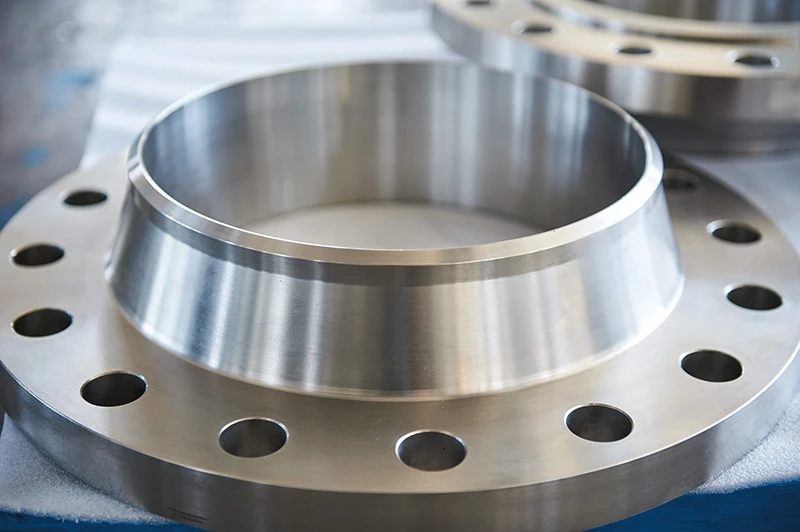
What are the effects of the flange end face not being perpendicular to the pipeline axis?
When making flange connections, if the end face of the flange is not perpendicular to the axis of the pipeline, it may cause a series of negative effects. First of all, this non-vertical situation may have a direct negative impact on the overall straightness of the pipeline, resulting in an unattractive appearance of the pipeline system and may even hinder the normal operation of the pipeline. In addition, there is a gap between the flange end face and the pipeline, which is prone to steam leakage. Furthermore, the non-verticality of the flange end face may make the connection of the flange face less tight, thereby increasing the possibility of medium leakage. Thirdly, if the flange is loose or falls off after installation, it will also reduce the sealing of the flange and easily cause the fluid to leak from the inside. In addition, after the flange is tightened, since the bolt holes of the two flanges are not arranged vertically, this may cause the outer edge of the Stainless Steel 316 Flanges to be misaligned, so that the axes of the two flanges are not on the same axis, which has an adverse effect on the strength and sealing effect of the connection. Thirdly, due to some human factors in the production process, such as improper valve installation or pipeline blockage, it is also easy to cause stress concentration in the pipeline. These suggested problems may bring huge risks to the stability and safety of the pipeline system.
What are the reasons for medium leakage at the flange connection?
In the process of flange connection, medium leakage is one of the common problems. Leakage not only causes waste of energy and resources, but also seriously affects the safe operation of equipment. The reasons for this situation may involve the following points: First, mechanical damage such as scratches and pits may occur on the gasket and flange sealing surface, which may damage the smoothness of the sealing surface and cause leakage. In addition, due to the certain gap between the gasket and the flange, gas flow is likely to occur under the action of pressure difference, causing leakage. Furthermore, the sealing material used by the gasket is inconsistent with the properties of its medium, which may also cause leakage. Third, due to structural defects of the gasket itself or deformation caused by external forces during operation, the seal may fail. For example, if the material of the gasket cannot withstand the erosion of the medium or too high temperature, the gasket may fail. Third, there is relative sliding between the flange and the gasket. In this case, due to the large friction of the contact surface, leakage is likely to occur. In addition, during the installation of the gasket, if there is any deviation, such as not reaching a concentric and coaxial state with the flange, it may also cause leakage. Thirdly, during the flange assembly process, due to reasons such as excessive tightening torque or too low torque transmission efficiency, the fasteners may loosen or come off, causing leakage. In addition, inconsistent specifications of bolts, excessive length or short length, and corrosive substances in the flange gap when fixing the flange may have a negative impact on the sealing of the flange connection, which may lead to leakage.
What are the requirements for axial thrust in flange connection?
Although flange connection is convenient and reliable in use, its stiffness is relatively low, so it has higher standards for axial thrust. Therefore, flange connection is usually used in some large containers and pipelines, such as oil extraction equipment, nuclear power plants, etc. In the operation of the pipeline system, the flange connection must be able to withstand the pressure generated by the medium inside the pipeline and the tension or thrust applied by the external environment. When the axial thrust is too strong, the Stainless Steel 316 Flanges connection may become unstable or damaged, which may reduce its sealing effect or even cause it to fail. When the external environment changes, due to the limitations of its own material properties and installation methods, the flange connection also has a certain degree of deformation and damage. Therefore, in the design and application of flange connection, its bearing capacity for axial thrust must be considered in depth, and appropriate strategies must be implemented to control axial thrust, such as adding support structures or selecting suitable flange types.

How to prevent corrosion at flange connection parts?
Since the connection part of the flange is directly exposed to the external environment, it is extremely susceptible to corrosion. Once corrosion problems occur at the flange connection part, it will affect the normal operation of the equipment. Especially in open-air environments and ground settings, the connection part of the flange is more susceptible to corrosion. Therefore, when designing the flange, the anti-corrosion problem of the flange connection part should be fully considered. In order to avoid the influence of corrosion on the flange connection area, there are many possible solutions to choose from. Among them, the use of anti-corrosion coating is one of the most effective and economical methods. First of all, in order to avoid direct contact between the corrosive medium and the flange surface, we can choose to apply anti-corrosion coating. Since anti-corrosion coating has a good shielding effect on corrosive substances, it is generally not used as a protective coating for flange connection parts. However, due to the influence of environmental factors, anti-corrosion coatings may gradually fail in actual applications, so it is necessary to check and re-apply them regularly. In addition, since there are gaps between flanges, anti-corrosion coatings need to be applied to these gaps to protect them. Next, viscoelastic anti-corrosion technology is a feasible option. This technology can generate an elastic anti-corrosion layer on the flange surface, which can not only effectively isolate the corrosive medium, but also adapt to the slight deformation of the flange surface. In addition, the viscoelastic material itself has a certain flexibility and toughness, which can avoid the loosening or falling off of the bolts caused by local stress concentration due to excessive load. In addition, regular inspection and maintenance of the flange connection parts are also regarded as key means to prevent corrosion. If the corrosion problem can be identified and solved in time, the service life of the flange connection can be extended.

Under what circumstances may flange connection lead to safety accidents?
In certain specific environments, flange connection may cause major safety hazards. Since this structural form is prone to stress concentration, once damaged, it will cause catastrophic consequences, so flange connection must be strictly designed and inspected for safety. First of all, in the case of medium leakage at the flange connection, if the leaked substance is flammable, explosive or toxic and harmful, it may cause serious consequences such as fire, explosion or poisoning. In addition, due to the existence of harsh working conditions such as high temperature, high pressure, high speed and vibration, once damage or even catastrophic consequences occur, the losses will be immeasurable. Such accidents not only cause great harm to the staff and the surrounding environment, but may also cause damage to production equipment and suspension of production. Therefore, it is necessary to ensure that the flange connection structure has sufficient strength to prevent the above dangers. Furthermore, when the flange connection elements, such as bolts, are severely corroded or damaged, the connection may also fail. In addition, when there is liquid or gas in the pipeline, it will also cause the fluid flow rate to increase, resulting in a greater pressure in the pipeline. In such a scenario, the pipeline system may burst or leak due to the inability to withstand the pressure exerted by the internal medium. In addition, the defects and corrosion in the flange connection will reduce its service life and even cause catastrophic consequences. Therefore, in order to ensure the stability of the Stainless Steel 316 Flanges connection, we must regularly inspect and maintain the flange connection so as to identify and solve possible s afety problems in a timely manner.
In general, although flange connections occupy a core position in industrial manufacturing, their potential problems cannot be underestimated. At present, many domestic enterprises have adopted flange connection technology for production and processing. However, it is found that there are still some safety hazards in flange connection in the actual application process. Through in-depth analysis and discussion on the non-perpendicularity between the flange end face and the pipeline axis, the leakage of media at the flange connection, the axial thrust demand, the corrosion problem and the risk of safety accidents, we can have a more comprehensive understanding of the problems and potential hazards of flange connection. At present, due to the structural defects of the flange connection itself and the inadequacy of the manufacturing process, some production accidents have occurred. In order to ensure the safety and stability of the industrial production process, it is necessary to strengthen the management and maintenance of flange connections and implement effective prevention and solution measures. Only in this way can the various defects and safety hazards of flange connections be fundamentally solved, so as to ensure that flange connections can operate safely and reliably. At the same time, with the continuous progress of science and technology and industry, we also need to actively research and develop new flange connection technologies and methods to enhance the reliability and safety of flange connections.